


Patty Douglas is an associate professor of disability studies at Queen’s University and author of Unmothering Autism. She also describes herself as “a mom of two neurodivergent sons, one of whom attracted the label of autism.”
“Autism is a made up category just as much as it is a very real lived experience,” she said. “I use that language, which actually comes from my colleague and dear friend Katherine Runswick-Cole, to kind of signal that I don’t, and we don’t, in our family place a final word on that word autism.”
“Autism and our understanding of autism and what is autistic is always emerging and it could become something else.”
Douglas spoke with People First Radio about autism and motherhood. She says there have long been narratives blaming mothers in various ways for various things related to autism.
“ The first mother that came along were refrigerator mothers. So that was the idea that you were an inherently cold person, even if you appeared warm, you had something disordered in your ability or mechanism of love,” she said.
Douglas said that as a biomedical understanding of autism gained prominence, narratives shifted.
“All of a sudden mothers were to be sort of the hero therapist,” she said.
“Therapies like applied behaviour analysis and others being taught to mothers, coming into the home, and we were now to be therapists for our children.”
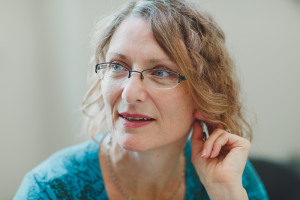
Patty Douglas is the author of Unmothering Autism
Douglas said she was expected to perform behavioral therapy when her kids were growing up.
“Part of our history as a family was having a behavioral consultant come into our home and teach us what to do. And so we all took part in this behavioral therapy and, my kids still laugh about it and we laugh about it as a family because it’s like, yeah, I remember those behavior charts we all had to do.”
“You were supposed to be learning this therapy technique in order to get any service at all at the time, and I didn’t have time. I wanted to spend time with my children and enjoy my children. So I was always the mom showing up late or not having done her homework and getting threatened to get kicked out of the services because I wasn’t complying enough. And yeah, anyway, that was the hero therapist. And if you, if your child started to look quote unquote normal, then you were doing well, but if they didn’t, you were blamed for that too.”
While Douglas writes about mothering, she says it’s important that the voices of autistic self advocates are heard as well.
“The most important voices to me, even though I write about mothering, are autistic self-advocates.”
“Those are parallel fights of really important knowledge that needs to be lifted up… I just appreciate this opportunity to, to talk about the book and to kind of elevate both.”
 Apple Podcasts
 Spotify
 YouTube