


During the outbreak of a new and potentially fatal disease in Toronto in 2003, it fell to psychiatrists Bob Maunder and Jon Hunter to help people in the SARS ward cope.
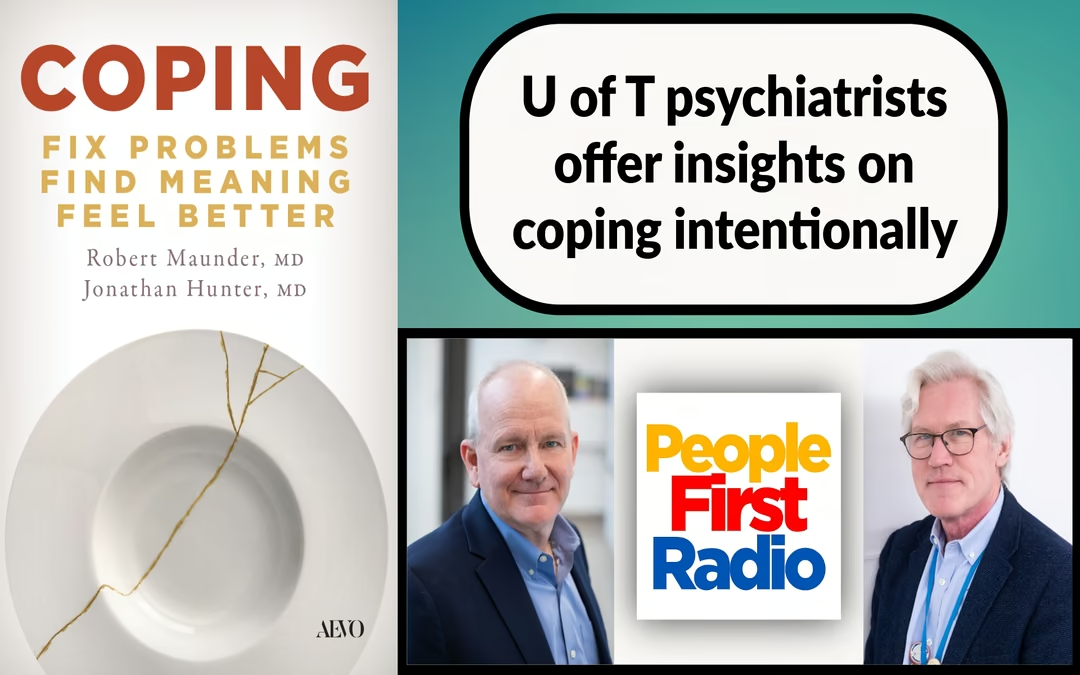
The two have been focusing on coping in their professional lives ever since, and have recently co-authored a book on the subject, Coping: Fix Problems, Find Meaning, Feel Better. They spoke with People First Radio on the subject matter.
“Thinking intentionally about coping is part of the key to coping effectively because we’re all under stress of one kind or another every day, sometimes the usual hassles and sometimes more severe,” said Maunder.
“Most of us don’t even think about coping until a situation is kind of severe enough that we’re not sure whether we have the capacity to respond to it effectively or not.”
Maunder says those are the times when it’s helpful to start to intentionally think about whether the problem can be dealt with via a series of thoughtful questions.
In Coping, Maunder and Hunter provide a three step algorithm for thinking about coping with a problem: solve it if you can, do things to feel better about the parts that you can’t solve, and seek meaning and purpose if the suffering persists.
“We didn’t invent those three steps,” said Maunder. “They come from evidence.”
Maunder spoke about the use of distraction as a form of coping.
“Most people think that distracting yourself from a problem is ineffective, you know, useless, problematic coping, and yet it is one of the most commonly used forms of coping,” he said.
“And when balanced with other things that are kind of more directly facing a problem, a distraction is actually a pretty good thing to have in your tool belt as one of the various ways that you cope, as opposed to denial, like not even acknowledging that you have a problem, which is almost never helpful.”
The book also featured a number of interviews with people who shared how they coped with difficult real world experiences, including the loss of several direct family members in a short time, a terminal cancer diagnosis at a young age, and growing up in an abusive home.
Hunter said some of the people they spoke to turned to substance use to cope with their circumstances.
Several times in those interviews where people told us that they coped with difficulty in their life by using substances for instance. And, we’d be hard pressed to say that using substances is something we’d like to recommend to people. On the other hand, it’s clear that for those individuals at that point in time, it was what they had available and what they could use to manage. They have each subsequently gone on to say, ‘And then I gave it up because it had too much cost for me.’
So it’s easy to condemn that at the moment as saying, ‘Well, you shouldn’t use drugs to cope.’ But on the other hand they didn’t have another strategy for coping. They were in extremis and they were in tough circumstances, and it got them through something that was unmanageable otherwise.
Maunder says that when you are in the midst of a difficult problem, you will be hard pressed to learn and try out new coping strategies.
“ The middle of a situation that feels very stressful and overwhelming is no time to try and learn anything, right?” He said.
“ That’s a time to return to the most effective things that you’ve managed and the most comfortable ways of coping that you’ve had over the years.”
He says in between those moments is a good time to train yourself in new coping methods.
“ There’s lots of coping tactics in there that are skills-based, right? And learning new skills at a time when you’re not feeling so stressed, things like whether that’s meditation or yoga or building up some new pattern of exercising and living in a healthy way or whatever it is, those are good things to kind of focus on as projects during the times when you’re not so stressed so that you can use them when you need them.”
Hunter says one of the hopes for the book is that it will help people know themselves and give themselves grace around the coping strategies that work for them.
There’s a thousand things that people are gonna be stressed by. There’s a thousand ways of coping, and, we can call that stressor a good stressor or a bad stressor. We can call that coping a good coping or a bad coping. They get mixed up together, and what we’re… hoping people will take away from this book is you’ve got strengths, you’ve got capacities, you’ve got abilities, you can do certain things in certain ways.
Know yourself. Figure out what suits your circumstances. If you can solve the problem, why not just solve the problem? That’s simple and straightforward. But if you’re stuck at that level, then bump up the ladder to step two or step three, and don’t spend a lot of time agonizing over whether it’s a good thing or a bad thing, but recognize that you’re doing your best to cope and adapt and manage in a difficult circumstance.
 Apple Podcasts
 Spotify
 YouTube